
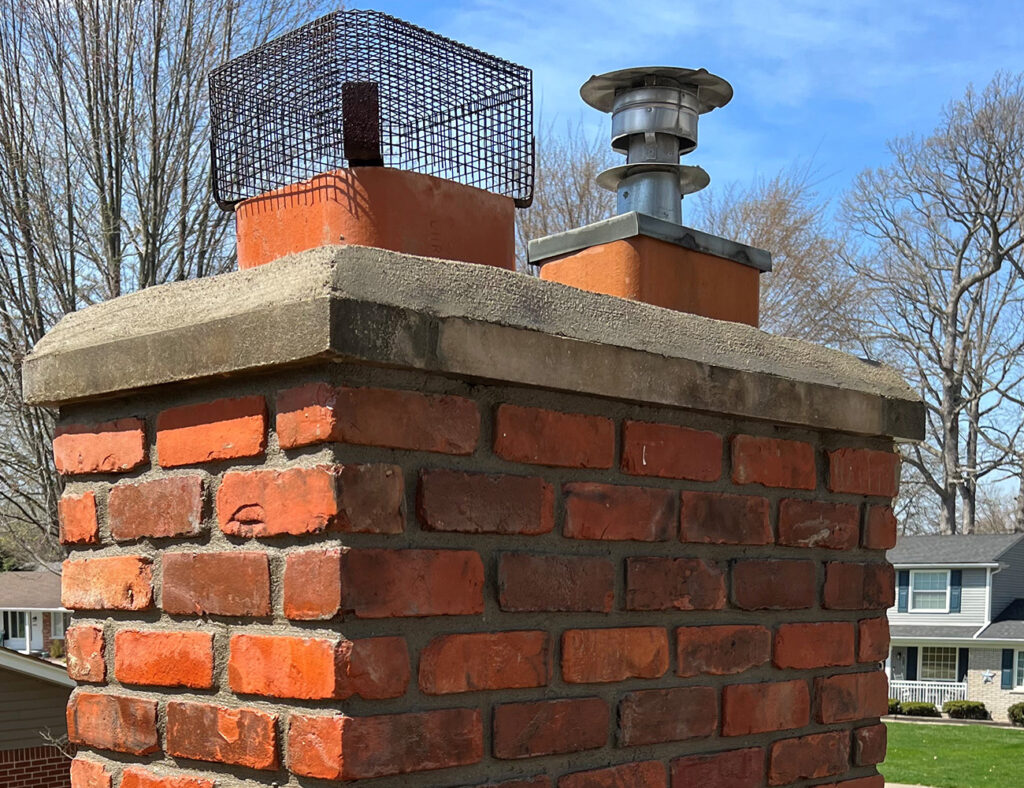
- Chimney crowns are concrete slabs topping your chimney and shed water away from the structure.
- Harsh freeze and thaw cycles cause masonry to crack, allowing water to seep into the brickwork.
- Quick detection of surface damage allows for simple repairs instead of full, costly replacements.
What is a Chimney Crown and Why Does It Crack?
The chimney crown is the solid concrete pad covering the top of your chimney structure. Its primary job is to act as a protective umbrella, shedding rainwater and snow away from the porous bricks and mortar below. Because it sits completely exposed to the elements, this slab bears the full brunt of Michigan weather. Over time, this constant exposure leads to wear. In the Detroit area, a primary culprit behind a cracked chimney crown is the freeze-and-thaw cycle. When rain or melting snow sits on the concrete, the moisture is absorbed. As temperatures drop below freezing, that trapped water expands, pushing against the concrete. When it warms up, the water melts, leaving behind slightly larger gaps. This repetitive stress eventually splits the concrete.Warning Signs of Chimney Crown Damage
The top of your chimney is difficult to see from the ground; damage often goes unnoticed until a major problem develops. However, there are warning signs that tell you it is time to call a professional team.- From the ground, you might notice visible cracks or the faces of bricks of the chimney starting to pop off or flake away.
- Inside your home, signs include water stains on the ceiling or walls near the chimney, or a musty odor.